Home / Professional aircraft cleaning & sanitation.
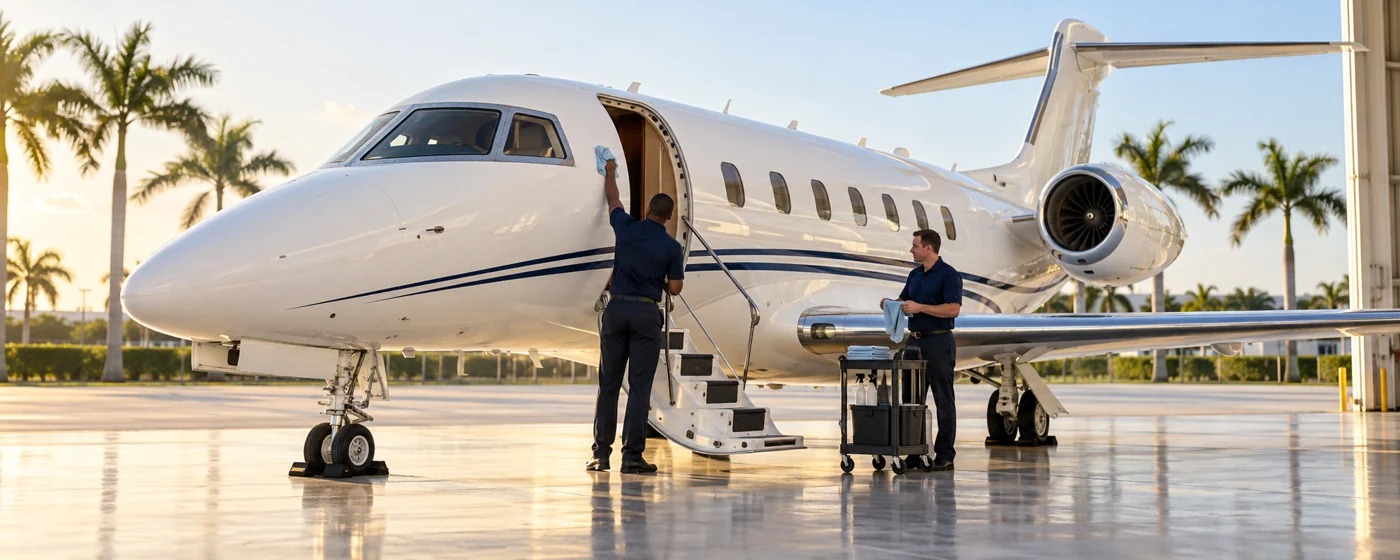
Professional aircraft cleaning & sanitation.
Detailed cabin cleaning, sanitation and surface disinfection planned around your aircraft, your crew and your next departure. Serving South Florida aircraft owners, charter operators and flight departments.
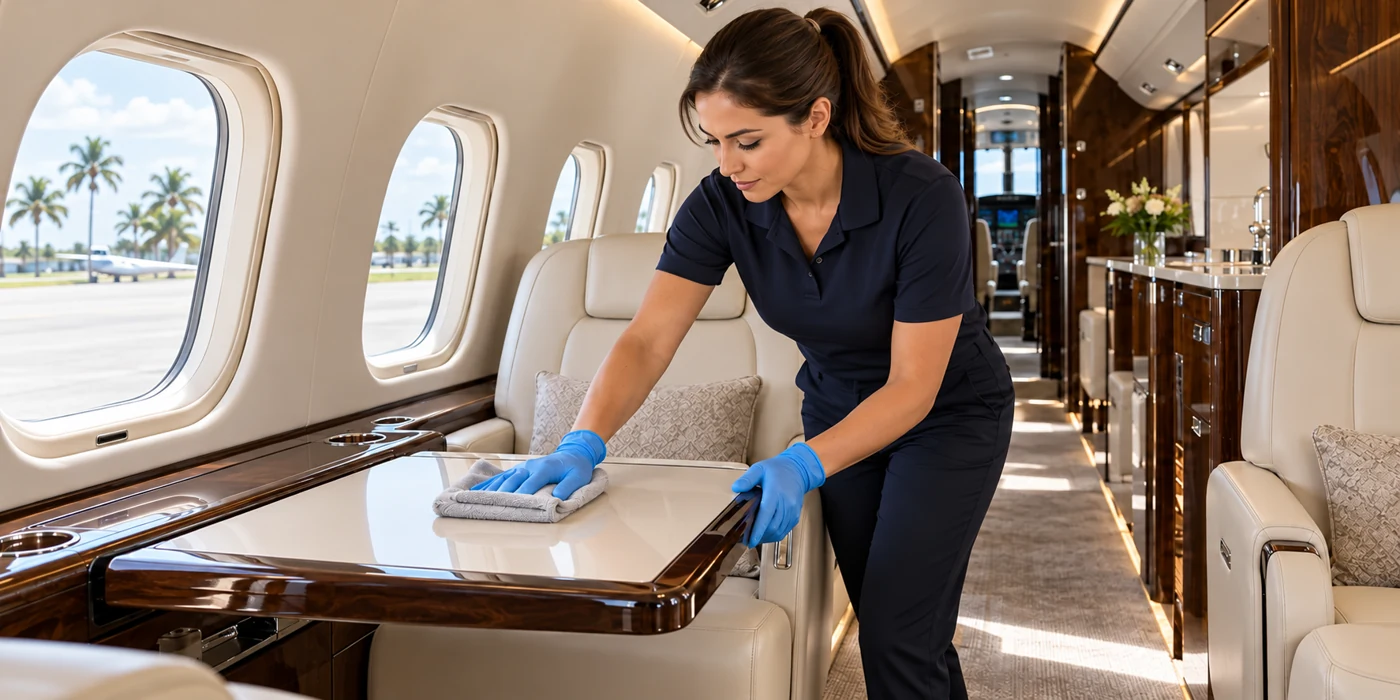
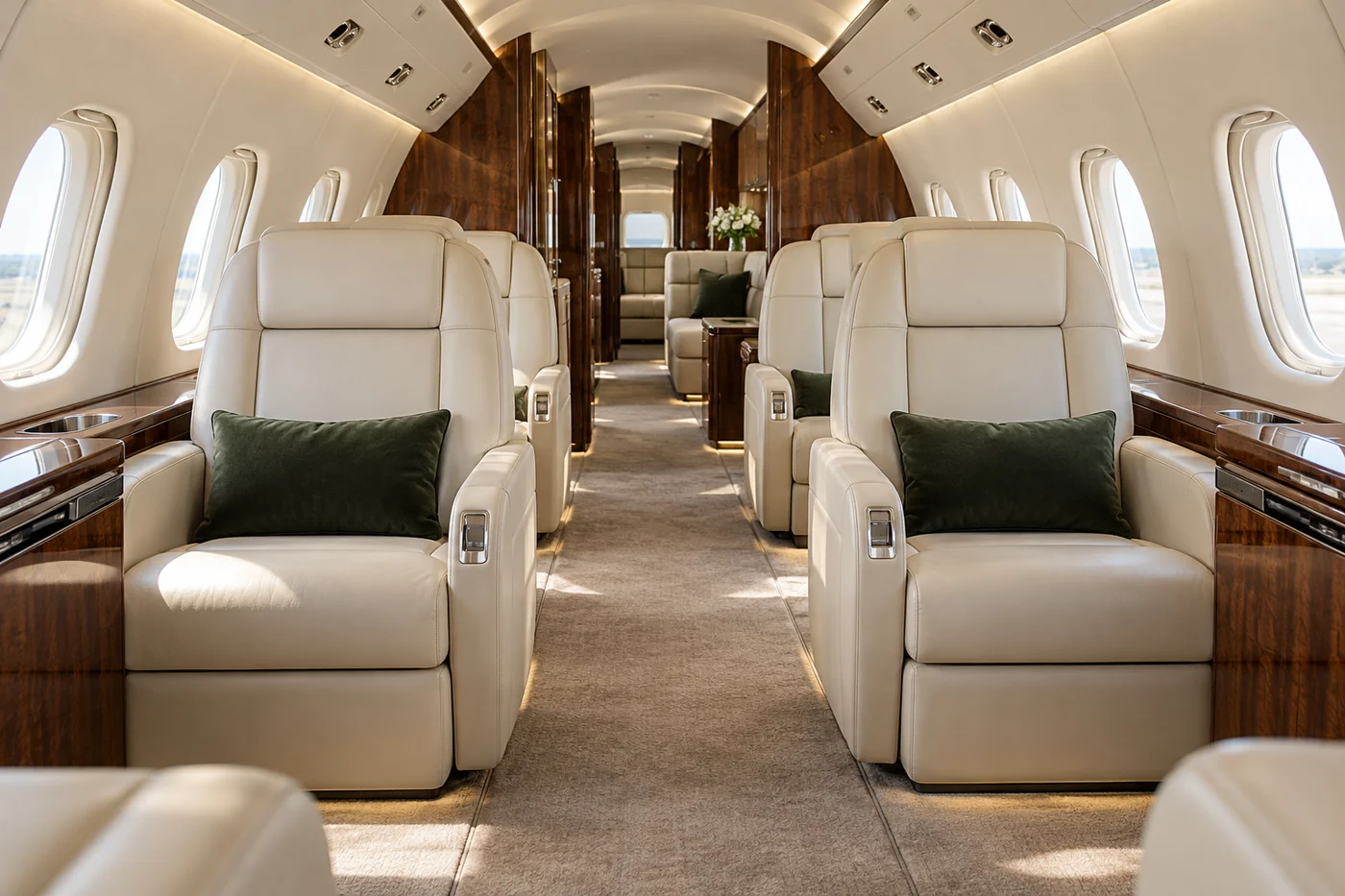
A defined interior cleaning scope can include removal of loose debris, vacuuming accessible floors, cleaning compatible hard surfaces and presenting passenger seating areas. We review leather, carpet, fabric, wood and plated trim individually.
02
Aircraft sanitation
Sanitation focuses on the practical cleanliness of cabin touchpoints, galley work areas and lavatory fixtures. Tasks, products and cloth handling are planned for the area being cleaned, with food-contact directions considered separately.
03
Surface disinfection
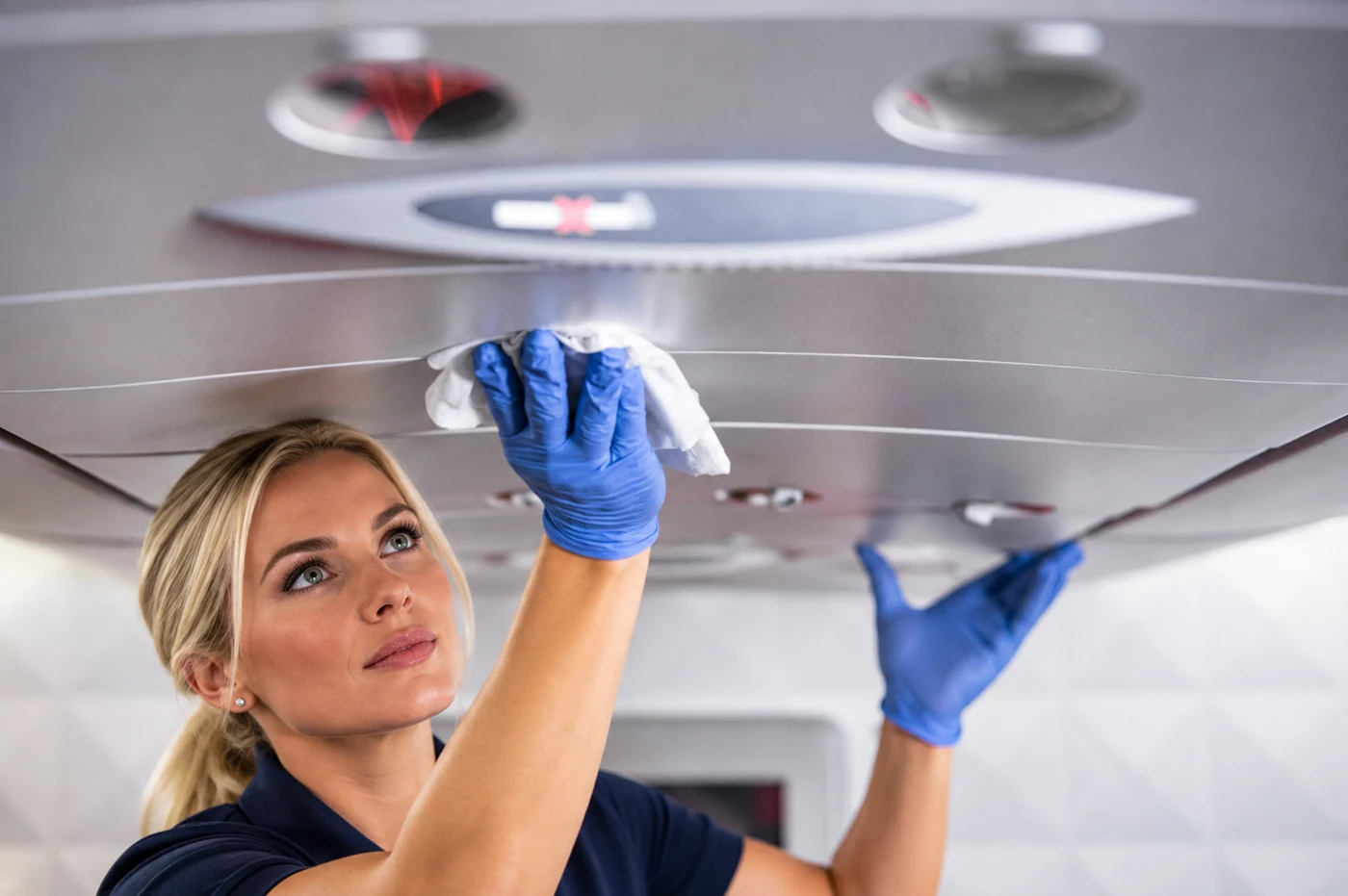
Where disinfection is requested, the product must be appropriate for the proposed use and permitted by aircraft and material instructions. Required pre-cleaning, label contact time, ventilation and re-entry directions form part of the scope.
04
Material-aware methods
Delicate finishes, adhesives, leather coatings, screens and aircraft equipment need specific care. Product selection is checked against available aircraft and operator instructions rather than assuming one cleaner fits every surface.
05
Care for your operation
Private aircraft, piston and turboprop cabins, helicopters, business jets, charter fleets and flight-school aircraft can each require a different schedule and work scope. Tell us the model and use of the aircraft when enquiring.
06
A clear completion handover
We coordinate access, timing and completion with your crew or operator. We report conditions that need their attention and discuss drying, ventilation or product-label requirements before handing the cabin back.
Cleaning, sanitation and disinfection are related tasks with different purposes. Disinfection is not a guarantee of a germ-free aircraft or lasting protection. Aircraft disinsection is a separate insect-control service. Crew operational checks and maintenance release remain with the operator.
From one visit to recurring cabin care.
Discuss the aircraft, base airport, passenger schedule and cabin priorities. We can plan one-time service, pre-departure presentation or a repeat cleaning scope around your operation.
Cabin hygiene for surface and airborne contamination.
Aircraft hygiene involves both the surfaces people touch and the air that moves through the cabin. Our surface-cleaning and disinfection scope is coordinated with your operator’s cabin ventilation and re-entry requirements.
Bacteria & viruses on surfaces
A compatible disinfectant can target the bacteria and viruses identified on its label when used as directed, including the full contact time. The selected product and aircraft instructions determine the permitted surfaces and method.
Airborne bacteria & virus-containing particles
Aircraft ventilation exchanges cabin air. On aircraft equipped with suitable HEPA filtration, the filters capture airborne particles, including bacteria and virus-containing particles. Equipment, airflow and maintenance requirements vary by aircraft; your operator or maintenance team confirms the installed system.
Surface disinfection does not establish that cabin air has been disinfected. Any dedicated air-treatment method requires its own evidence, aircraft compatibility review, product authorization and operator approval. Cabin cleaning does not include air-system maintenance or a guarantee of pathogen-free air.
Discuss targeted steam-assisted cleaning and sanitation for surfaces whose aircraft and material instructions permit heat and moisture. The scope is reviewed with your operator before work begins.
Selected surfaces, controlled treatment
We assess the finish, seams, adhesives and nearby equipment before choosing a method. Steam is not assumed suitable for leather, veneers, screens, avionics or every aircraft interior.
Disinfection needs a validated process
Any steam-disinfection claim must be supported by the specific equipment, achieved surface temperature, exposure time, target organism and surface conditions. A hot nozzle or brief pass alone does not demonstrate disinfection.
Where a validated thermal-disinfection method is unavailable or incompatible, discuss an alternative cleaning and label-directed disinfection scope. Drying, ventilation and crew handover are included in planning.