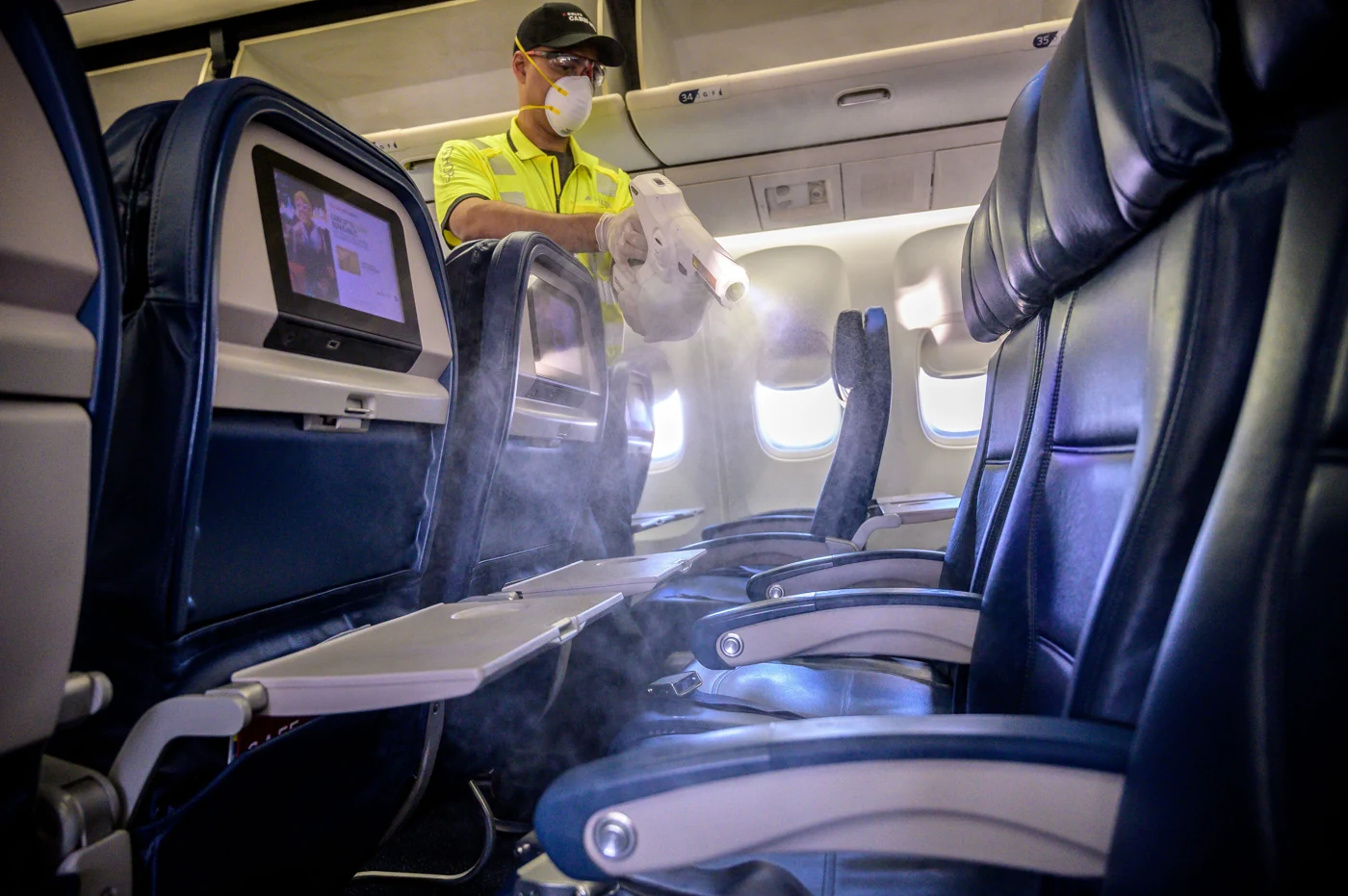
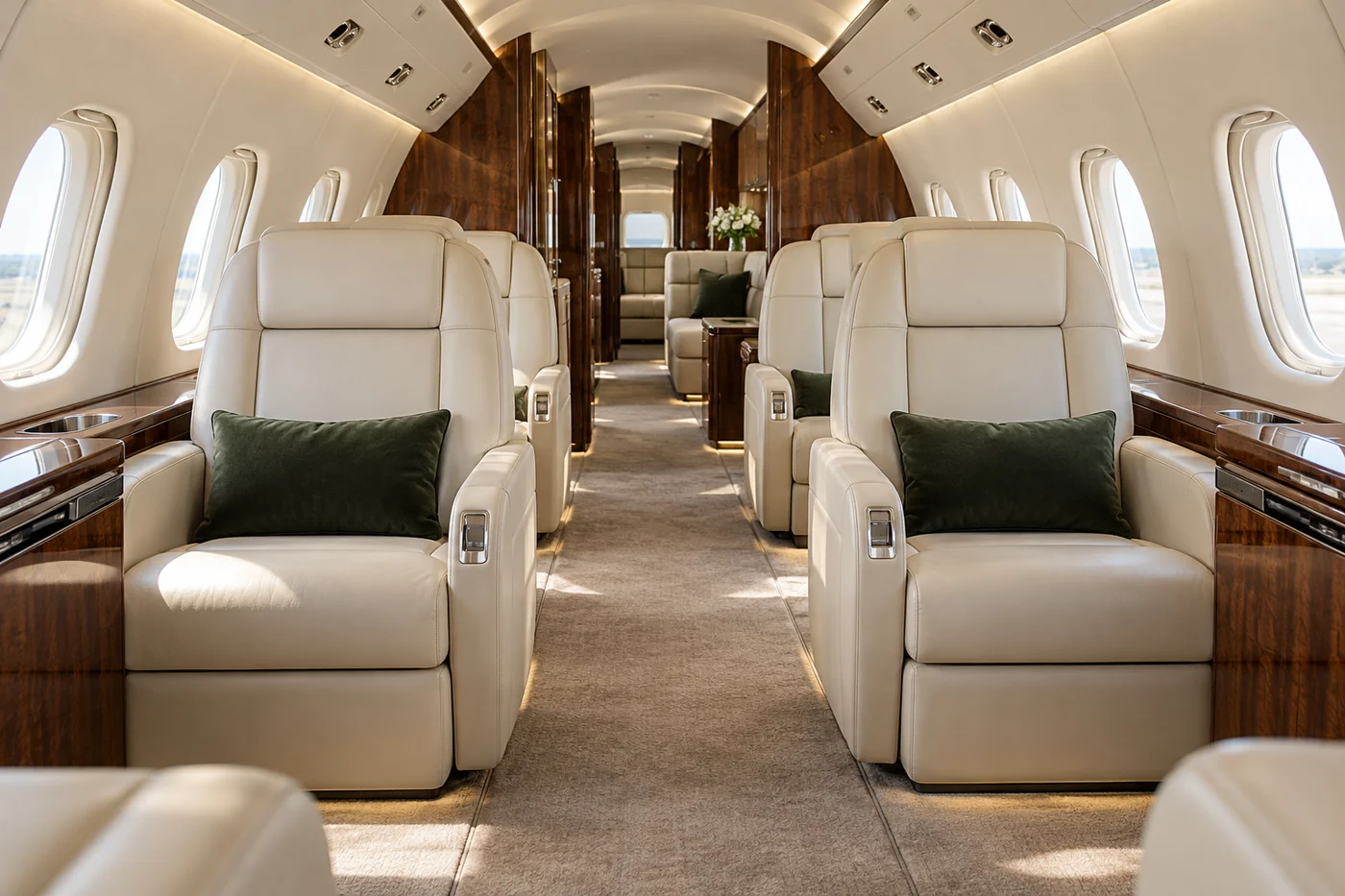
Aircraft cleaning & disinfection. A practical guide.
Understand cabin cleaning, surface disinfection and material care—and the details that help your crew plan the right service for a private aircraft, charter fleet or commercial airliner.
Cleaning lifts soil, crumbs, oils and other contamination from a surface. Disinfection targets microorganisms using a suitable product and method. Removing soil first matters because remaining contamination can interfere with the process.
The service starts with the aircraft’s current instructions and the operator’s agreed scope. A product appropriate for one interior material or aircraft type is not automatically suitable for another.
A quick wipe is not the same as label-directed disinfection.
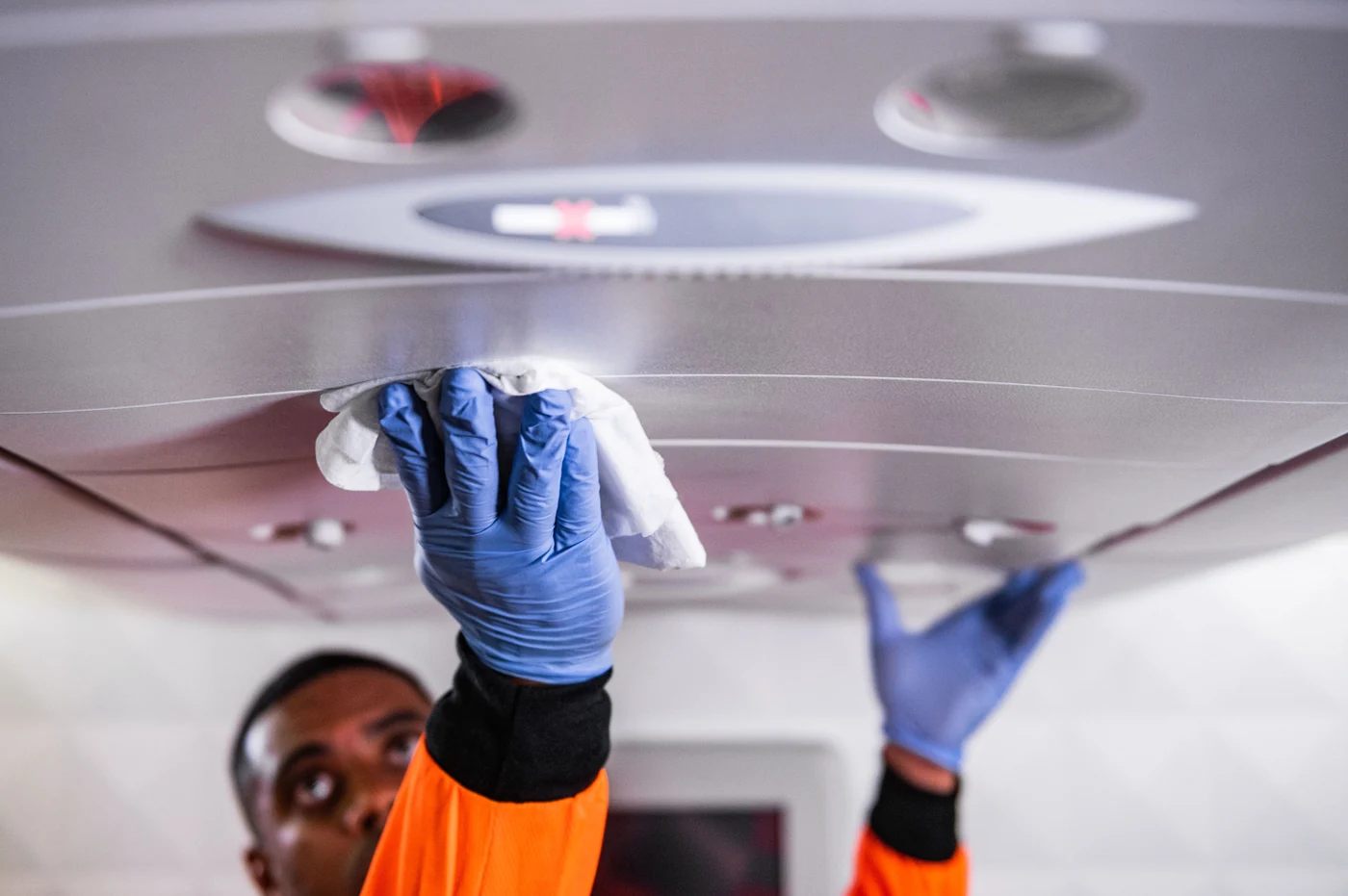
EPA explains that a disinfectant must remain on the surface for its stated contact time, with the surface visibly wet throughout that interval. The label also identifies permitted uses and application directions. Product identity, intended use and aircraft-material compatibility must all be checked; EPA registration alone does not establish suitability for every aircraft surface.
02 / MATERIALS MATTER
Different surfaces. Different care.
Leather and upholstered seating: use methods suited to the finish. Leather requires its own care products; fabric and carpet need debris removal and appropriate treatment for any stains.
Carpet and soft furnishings: vacuum accessible areas and discuss spots, spills and drying time before more intensive cleaning. A short turnaround may call for a different scope from an overnight visit.
Panels and windows: select aviation-suitable cleaners for the particular surface. Harsh chemicals can damage finishes or cause discoloration.
Displays and sensitive equipment: follow equipment-specific instructions and control moisture. Crew authorization and the aircraft’s procedures determine what may be touched.
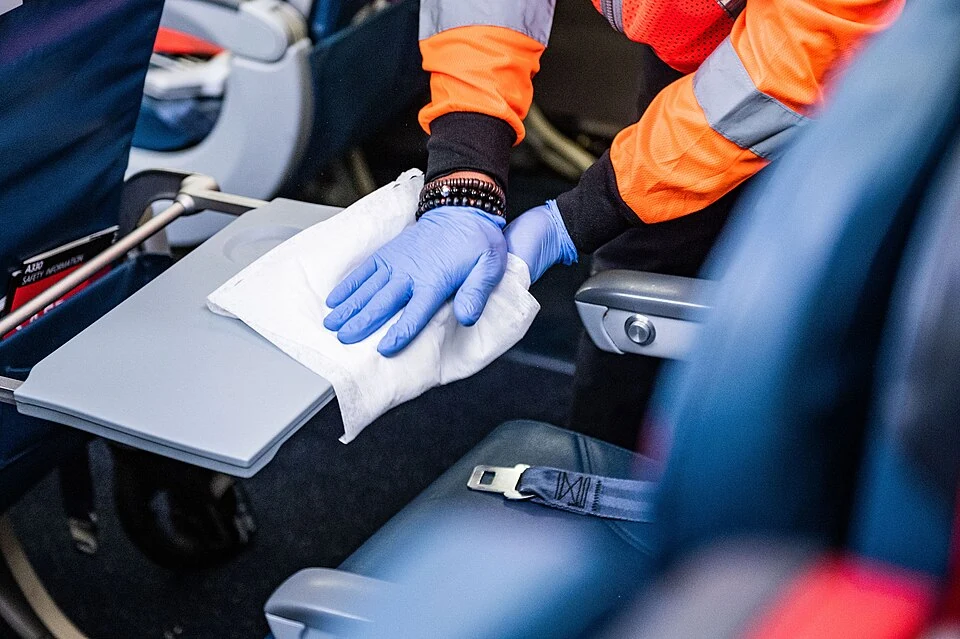
Tray tables, armrests, buckles, cabin handles and stowage surfaces are useful areas to discuss. Screens, switches and coated trim need their own restrictions. The crew identifies permitted tasks before work begins.
GALLEY & LAVATORY
Plan the work by area.
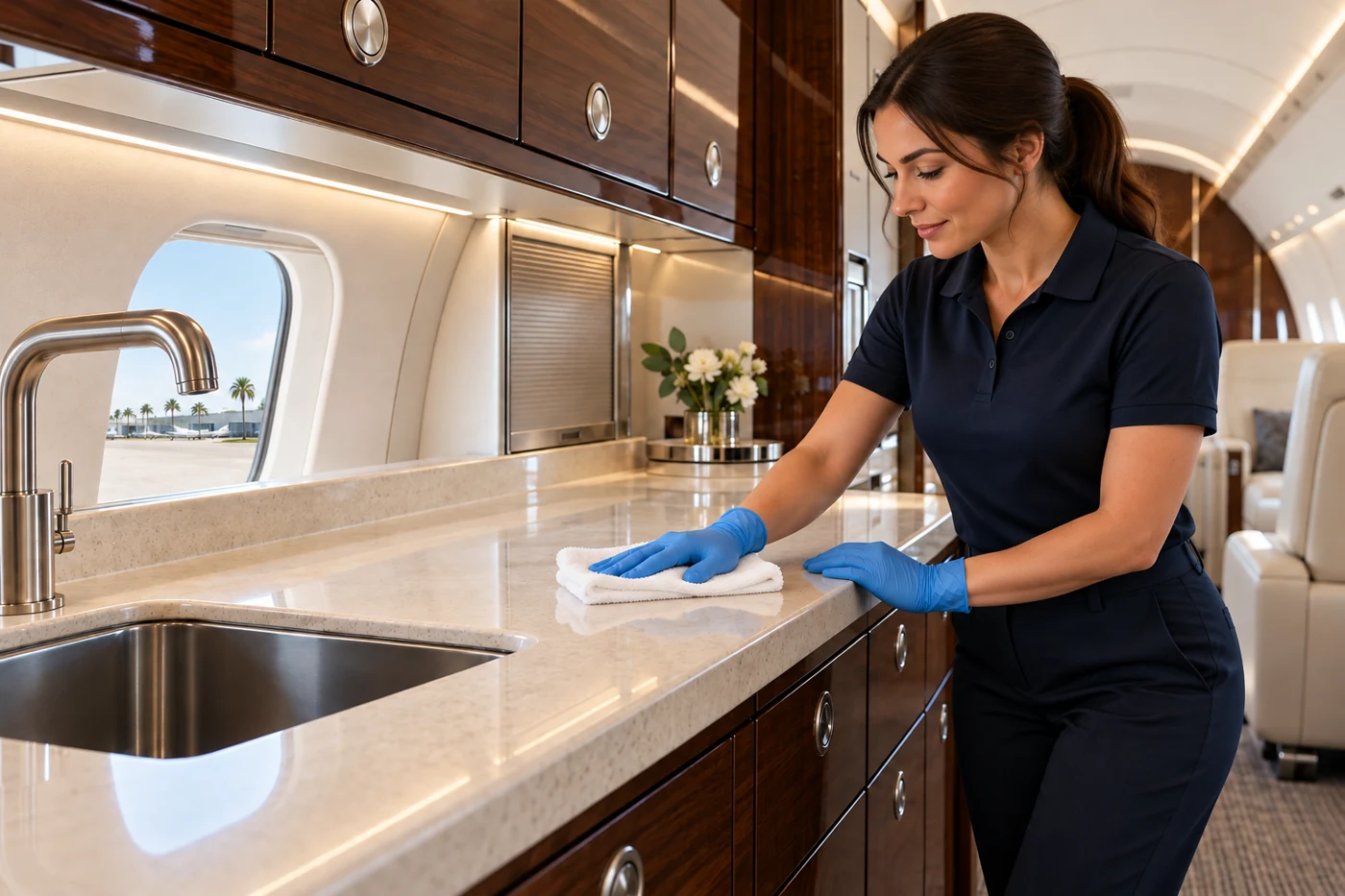
Agree which worktops, sinks, fixtures and accessible surfaces require cleaning. Keep galley and lavatory tools separate, use suitable protective equipment and follow the operator’s waste procedures. Any food-contact rinse requirement comes from the selected product’s directions.
03 / FIT THE WORK TO THE GROUND WINDOW
Turnaround, overnight or detailed cabin care?
Between flights
Prioritize the agreed cabin tasks within the available ground window. Share the departure time, passenger count, catering plans and any areas needing special attention.
Overnight or layover
A longer window allows a more extensive cleaning scope and time for drying and handover. Confirm when the aircraft will be accessible and whether maintenance is also planned.
Detailed interior work
Agree access and limits in advance. Work involving removal of panels, installed equipment or galley inserts needs maintenance coordination; it is not assumed to be part of a cabin-cleaning appointment.
Recurring fleet visits
Build the proposal around aircraft types, bases, utilization and the operator’s checklist. Define who authorizes each visit and who receives completion notes.
METHODS & EQUIPMENT
Review the method before the visit.
Spraying, fogging and other treatment technologies need aircraft-specific review. The applicable aircraft instructions, product directions and operator authorization determine whether a method is appropriate.
Cabin hygiene for surface and airborne contamination.
Aircraft hygiene involves both the surfaces people touch and the air that moves through the cabin. Our surface-cleaning and disinfection scope is coordinated with your operator’s cabin ventilation and re-entry requirements.
Bacteria & viruses on surfaces
A compatible disinfectant can target the bacteria and viruses identified on its label when used as directed, including the full contact time. The selected product and aircraft instructions determine the permitted surfaces and method.
Airborne bacteria & virus-containing particles
Aircraft ventilation exchanges cabin air. On aircraft equipped with suitable HEPA filtration, the filters capture airborne particles, including bacteria and virus-containing particles. Equipment, airflow and maintenance requirements vary by aircraft; your operator or maintenance team confirms the installed system.
Surface disinfection does not establish that cabin air has been disinfected. Any dedicated air-treatment method requires its own evidence, aircraft compatibility review, product authorization and operator approval. Cabin cleaning does not include air-system maintenance or a guarantee of pathogen-free air.
No. A surface-disinfection service does not mean the entire aircraft is sterile or remains free of microorganisms. Results and claims depend on the product, target organisms, surface and correct application.
Can any disinfectant be used inside an aircraft?+
No. Airbus directs operators to the applicable aircraft maintenance instructions for procedures and products. Delicate instruments, screens and interior components make material compatibility a central consideration.
Does fogging replace manual cleaning?+
Do not assume it does. Airbus describes benefits and limitations for alternative technologies and directs operators to the methods in the applicable maintenance documentation. A generic whole-cabin treatment is not a substitute for an aircraft-specific plan.
What about spills or a reported illness on board?+
Tell the operator and service team before arrival. Describe the affected area so the appropriate response, access restrictions and waste arrangements can be assessed. A routine cleaning booking does not automatically include a specialist contamination response.
What should I send for an accurate proposal?+
Aircraft model, airport and FBO, seating layout, requested areas, condition photographs, arrival and departure times, material restrictions and the crew or maintenance contact.
Let’s define the right care for your aircraft.
Share the aircraft, airport and available ground time. We will discuss the cabin priorities, material requirements and service window with your team.
Discuss targeted steam-assisted cleaning and sanitation for surfaces whose aircraft and material instructions permit heat and moisture. The scope is reviewed with your operator before work begins.
Selected surfaces, controlled treatment
We assess the finish, seams, adhesives and nearby equipment before choosing a method. Steam is not assumed suitable for leather, veneers, screens, avionics or every aircraft interior.
Disinfection needs a validated process
Any steam-disinfection claim must be supported by the specific equipment, achieved surface temperature, exposure time, target organism and surface conditions. A hot nozzle or brief pass alone does not demonstrate disinfection.
Where a validated thermal-disinfection method is unavailable or incompatible, discuss an alternative cleaning and label-directed disinfection scope. Drying, ventilation and crew handover are included in planning.